
The Historic Hotel Boom
- Anne Marie Brown
- May 30
- 5 min read

In the K-shaped economy, the race for irreplaceable hotels is going strong. Investors are chasing the top half of the “K,” targeting the luxury spending of travelers whose pocketbooks are most insulated against global disruption and inflation.
In this vein, we have recently seen a rash of historic properties being acquired, renovated, and reflagged under luxury brands.
Case in point – two years ago, I sat on the patio of the Old Cataract Hotel in Aswan, watching the feluccas sail past at sunset, imagining Agatha Christie penning “Death on the Nile.” Previously a Sofitel, the Old Cataract commands prime real estate on the bank of the Nile and a famous history that rivals many of the Grande Dame properties in Europe.
Now, Mandarin Oriental will take over the Old Cataract as well as the Winter Palace in Luxor, planning significant renovations to both before they reopen in 2027 together with the debut of the brand’s first luxury river cruise between Cairo and Aswan.

Venice is the epicenter
Venice, where real estate is finite and demand is not, has become the center of this activity:
Rosewood Hotel Bauer, the 1880 landmark situated between the Grand Canal and Piazza San Marco, is now in mid-renovation.
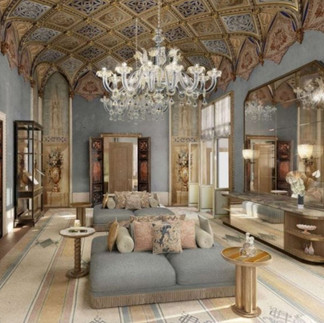
Hotel Danieli is being reflagged as a Four Seasons. Designer Pierre-Yves Rochon is uniting its three historic palaces and restoring Gothic architectural details. The renovation carries a €30 million price tag, with 52 suites and 168 guest rooms. Reopening shortly (“mid-2026”).
Orient Express Venezia opened in March inside the restored 15th-century Palazzo Donà Giovannelli in Cannaregio, with 47 rooms, suites, and residences, preserving original frescoes and high ceilings.
Airelles Venezia opened on the island of Giudecca inside a former 16th-century school for young women and a 17th-century villa. Airelles also operates the only hotel inside the Palace of Versailles, so they know something about historic real estate.
Beyond Venice: the former U.S. Embassy in Mayfair is now The Chancery Rosewood. In Berlin, the 19th-century HQ of Dresdner Bank is being converted to a Four Seasons. A 15th-century Austrian castle on Lake Fuschl is now Rosewood Schloss Fuschl.




Why these assets, why now
As a hotel investor, I can confidently say that the economics of building a new luxury hotel from scratch have become almost untenable. Construction costs have skyrocketed with supply chain disruption. With the Iran war and the pandemic still causing ripple effects throughout travel, institutional investors hesitate to back new greenfield development in an industry so susceptible to disruption.
All-in development costs for luxury properties now routinely exceed $2 million per key, with high interest rates making financing even tougher.
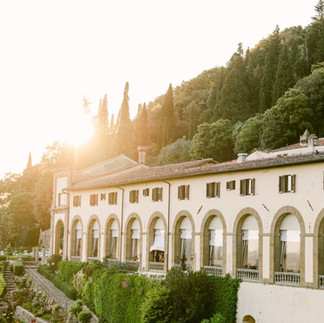
With that kind of development cost, luxury hotels are chasing high ADRs (average daily rates), and one of the best ways to justify them is to offer a historic property. A palace comes with several hundred years of story in the walls. That story is the product – the difference between all-but-identical city Marriotts in San Francisco and Rome, and a place like Passalacqua on Lake Como, a palazzo that once belonged to counts and that hosted Churchill and (though not quite at the same time!) Bellini.
Historic hotels carry an ADR roughly 12% higher than comparably luxurious contemporary properties, with occupancy running about 8 percentage points above average.
Investors like me call this a moat. There is nothing comparable to staying in a 14th-century Venetian palace on the Grand Canal. A newly built five-star hotel nearby competes on amenities and price. The Danieli’s historic pedigree simply blows modern competition out of the (canal) water.

Who’s funding it
Ownership structures explain why properties that sat dormant or deteriorating for years are suddenly getting $30, $50, $100 million renovations. Sovereign wealth funds, primarily from the Middle East and Asia, have been targeting European gateway markets aggressively. In 2024, hard assets including real estate accounted for 61% of all publicly disclosed sovereign wealth fund direct investments, up from 40% the prior year.
Aman is a perfect illustration of what this capital is chasing.
In 2022, Saudi Arabia’s Public Investment Fund invested $900 million in Aman Group alongside Cain International, valuing the brand at $3 billion. The following year, Abu Dhabi’s Mubadala led a further $360 million round. That’s $1.26 billion in sovereign capital into a single ultra-luxury hotel brand in under 18 months. Aman now has properties under development at AlUla and Diriyah.
Egypt’s Garranah Group is backing the Luxor and Aswan Mandarin Oriental renovations and the river cruise, resulting in a luxury corridor linking Cairo, Luxor, and Aswan under the MO flag. Egypt gets world-class hospitality at its most iconic sites without bearing the full development risk, while Mandarin Oriental gets a flagship presence in one of the most famous destinations on earth.
Public Private Partnerships
Historic preservation in Europe adds another layer of complexity, which often requires both significant investment from an owner-operator, like a family office, or a company like LVMH (invested in Belmond), in partnership with the country or city where the development takes place.
Venice operates under one of the world’s tightest regulatory regimes – facades cannot be altered, architectural elements must be retained wherever possible, and permitting requires navigating multiple layers of local, regional, and national heritage authorities.
For most hotel developers, the combination of regulatory complexity and capital intensity is enough to steer clear of a project. In contrast, sovereign and institutional investors can hold an asset through a two- to three-year renovation and dark period without the financial pressure that kills most private real estate deals.
The Choice of Flag
The luxury brand brings a globally recognized flag, a distribution network, a loyalty program, and the operational expertise to run a property of this caliber.
The structure typically involves the investor owning the real estate while the brand manages under a long-term agreement. Mandarin Oriental’s Paris sale to Gruppo Statuto followed this model, with MO retaining a 50-year management agreement even after selling the asset.
The investor benefits from a world-class operator and premium brand attached to its irreplaceable asset. The brand gets a flagship property it could never afford to own outright, in a location with predictable traffic.
What it means for you
I rarely send clients to a new property in its first year, thanks to the heightened possibility of operational hiccups. But, if you can look past a missed turndown or slow breakfast service, the months right after a major historic property reopens tend to be the sweet spot. Opening-rate incentives are common before pricing stabilizes. Perhaps counterintuitively, neighboring properties often soften rates while a major competitor is off the market to entice travelers before the competition reopens.
When Rosewood Hotel Bauer (see above) comes fully online in Venice, expect the broader San Marco comp set to adjust upward.






Comments